CURRENT RANGE
The low edge is adjustable
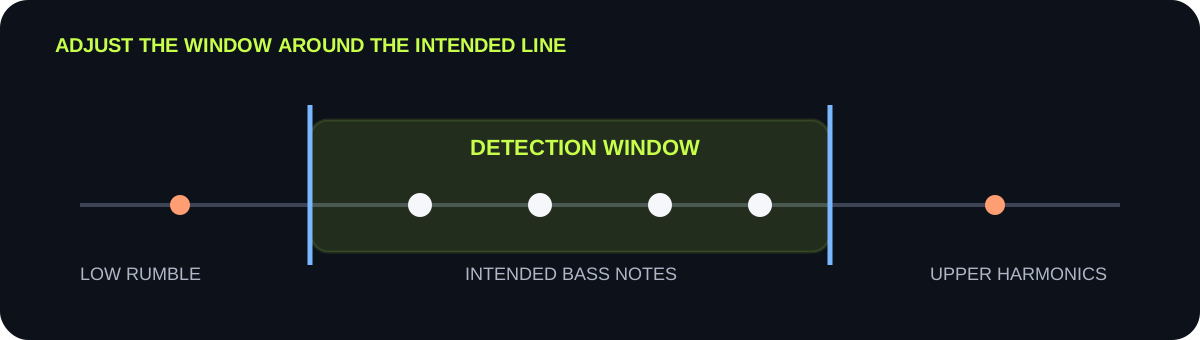
The live control allows a Low value from 40 to 400 Hz in 5 Hz steps. The default is 65 Hz. These are interface facts, not a claim that one value fits every bass recording.
LOW-REGISTER WORKFLOW
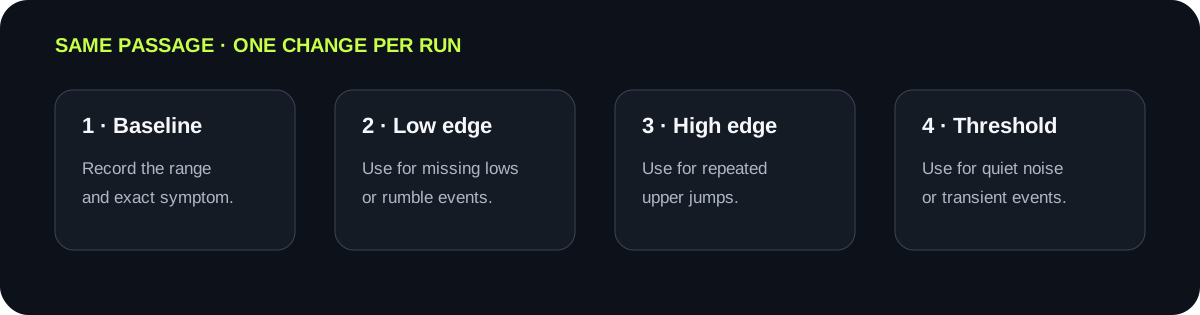
Use a clean, isolated bass line with one intended note at a time. Start with the current pitch window, convert once, and inspect the piano roll. Lower the bottom edge only when intended low notes are missing; raise it only when rumble creates unwanted low events. If notes jump an octave, change one pitch-range edge or the silence threshold and compare the same passage.
CONVERT LOCALLY
Keep the source passage fixed. Change only one range edge or threshold value before converting again.
INPUT MP3 / WAV / M4A / FLAC / OGG → OUTPUT .MID
or click to choose audio from your device
MP3, WAV, M4A, FLAC, or OGG · one file · up to 50 MB / 5 minutesRESULT
Your audio stays on your device. All processing happens in this browser. No file is uploaded to a server.
| What the preview shows | First controlled test | Why this test fits | Keep the change when |
|---|---|---|---|
| Intended lowest notes are absent | Lower only the Low pitch edge one step | The detector rejects frequencies below that edge | The missing notes return without new rumble events |
| Very low unwanted events appear | Raise only the Low pitch edge one step | The new edge excludes more low-frequency material | Unwanted events disappear and the bass line remains |
| Notes jump to a higher octave | Narrow the High edge or raise threshold, one test at a time | A harmonic or bright transient may dominate a frame | The intended contour remains without the repeated jump |
| Quiet tails create extra fragments | Raise Silence threshold in one step | Quieter frames are rejected before note grouping | Tail fragments disappear without clipping note attacks |
| Short intended bass notes disappear | Lower Minimum note in one step | Events shorter than the selected duration are removed | The short notes return without unstable fragments |
CURRENT RANGE
The live control allows a Low value from 40 to 400 Hz in 5 Hz steps. The default is 65 Hz. These are interface facts, not a claim that one value fits every bass recording.
FRAME DECISION
The current detector returns one frequency or no frequency for each analysis frame. A clean isolated bass line is easier to interpret than bass mixed with drums, chords, and vocals.
OCTAVE TEST
When the preview jumps, hold the source fixed and adjust only one edge. If that does not target the symptom, revert before testing threshold.
EXPORT
Use the piano roll and note summary to check the contour first. The sound heard later depends on the instrument assigned to the MIDI track.
QUICK ANSWERS
Yes, you can test an isolated single-note bass line in this browser tool. Inspect the preview because overlapping instruments, noise, and harmonics can change which pitch dominates a frame.
The intended note may be below the current Low pitch edge, too quiet for the threshold, or unstable in the mixed source. Change one condition at a time.
A harmonic can become stronger than the fundamental in some frames. Test one narrower range edge or one higher threshold value, then compare the same passage.
Use an available stem or isolated recording you are allowed to process. A full mix contains several competing pitched and unpitched sources.
The file stores note events rather than a recorded bass sound. Assign a bass instrument in your editor after you have checked pitch and timing.