THIS TOOL'S MATH
A quarter note contains 480 ticks
The current MIDI writer calculates each grid as 480 × 4 ÷ division. Its quarter, eighth, sixteenth, and thirty-second grids contain 480, 240, 120, and 60 ticks.
PLAIN-LANGUAGE ANSWER
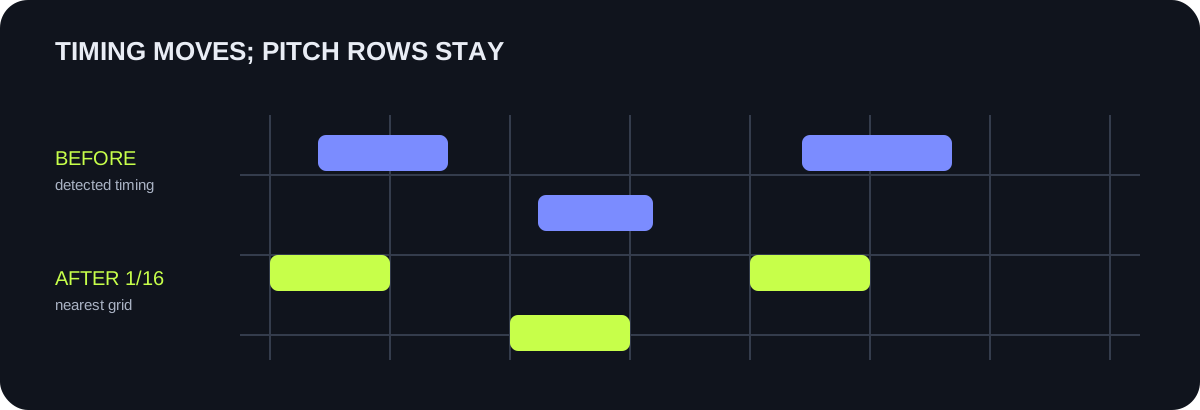
Quantization moves musical events toward chosen positions on a timing grid. In MIDI, it changes when note events start or end; it does not identify a different pitch or improve the original audio recording. A finer grid preserves more timing detail, while a coarser grid allows fewer positions and can move notes farther.
HEAR THE DIFFERENCE
Convert the same clear melody twice: once with Quantize Off and once with a named grid. Compare the downloaded MIDI files in the same editor.
INPUT MP3 / WAV / M4A / FLAC / OGG → OUTPUT .MID
or click to choose audio from your device
MP3, WAV, M4A, FLAC, or OGG · one file · up to 50 MB / 5 minutesRESULT
Your audio stays on your device. All processing happens in this browser. No file is uploaded to a server.
| Concept | What changes | What does not change | Observable test |
|---|---|---|---|
| Timing quantization | Note starts or ends move toward grid positions. | The intended pitch value is not corrected. | Compare event positions in the same MIDI editor. |
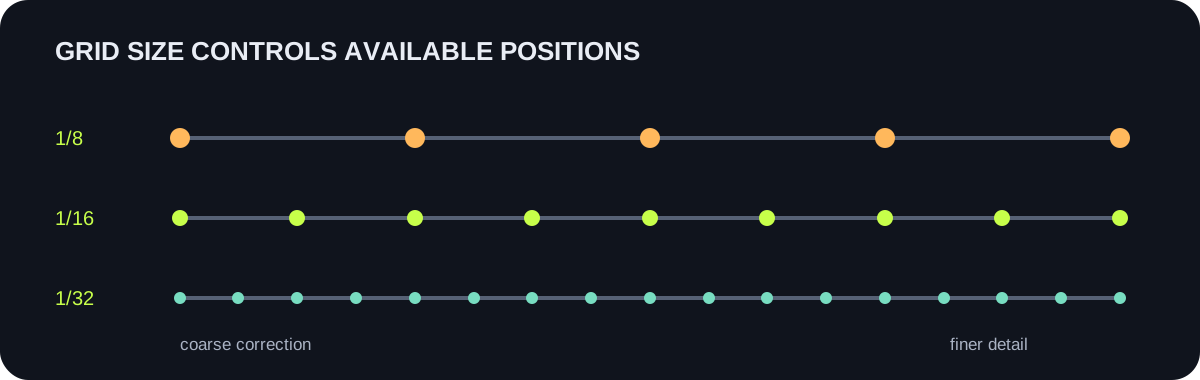
| Fine grid | More timing positions remain available. | Wrong or extra detected notes remain wrong or extra. | Try 1/32 or 1/16 against an Off baseline. |
| Coarse grid | Events may move farther because fewer positions are available. | Musical expression is not guaranteed to improve. | Check whether intentional syncopation or short notes changed. |
| Partial quantization | A compatible editor may move events partway toward the grid. | The browser writer uses full nearest-grid snapping. | Record the editor's strength value and compare one passage. |
| Pitch quantization | Some software can constrain pitches to a scale. | This is a separate operation from timing quantization. | Check pitch rows rather than horizontal timing positions. |
THIS TOOL'S MATH
The current MIDI writer calculates each grid as 480 × 4 ÷ division. Its quarter, eighth, sixteenth, and thirty-second grids contain 480, 240, 120, and 60 ticks.
NEAREST POSITION
The writer divides the raw tick position by the grid size, rounds to the nearest whole grid step, and multiplies back. Note ends are kept at least one selected grid step after their starts.
TEMPO
A sixteenth note is always one quarter of a beat, but its duration in milliseconds changes with tempo. At 120 BPM it is 125 ms; at 60 BPM it is 250 ms.
DECISION RULE
Use the same source and passage. Keep a grid only when the targeted timing problem is reduced and the intended rhythm, pickup, swing, or syncopation remains recognizable.
QUICK ANSWERS
It moves musical events toward positions on a timing grid. In MIDI, this usually changes event timing rather than pitch or sound quality.
It makes timing conform more closely to the selected grid. Whether that is musically better depends on the intended rhythm and cannot be decided from tighter timing alone.
A sixteenth-note grid provides twice as many timing positions as an eighth-note grid. It therefore preserves more timing detail and usually moves events a shorter distance.
Yes. A coarse or fully applied grid can reduce intentional timing variations such as swing, laid-back placement, or syncopation.
The page draws detected notes before file writing. Quantization is applied to event timing inside the downloaded MIDI file, so compare it after import into a MIDI editor.